
Last updated September 23, 2026
Free visual inspection and a written scope of work before any mitigation begins - photos, moisture readings, and drying logs go in your claim file
The scope we write is the scope we bill. Anything new gets shown to you, in writing, before we touch it.
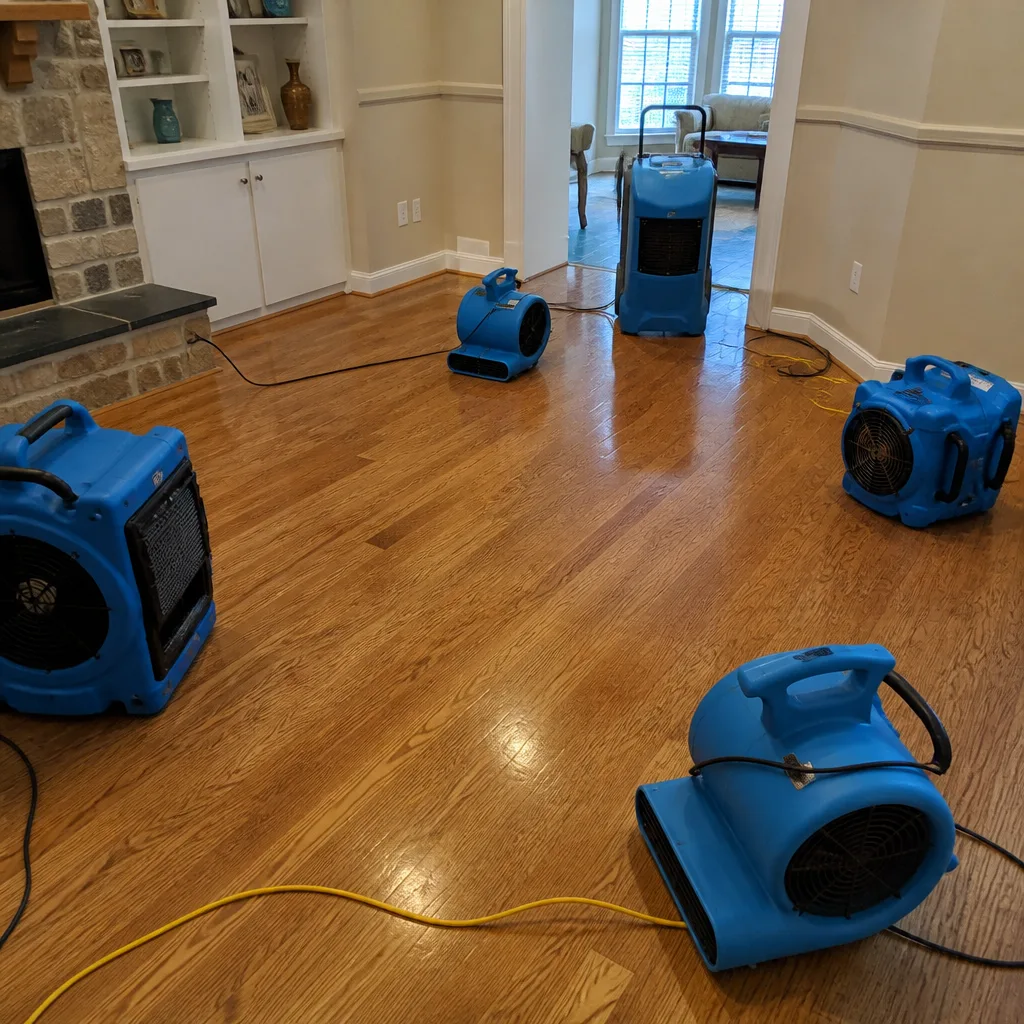
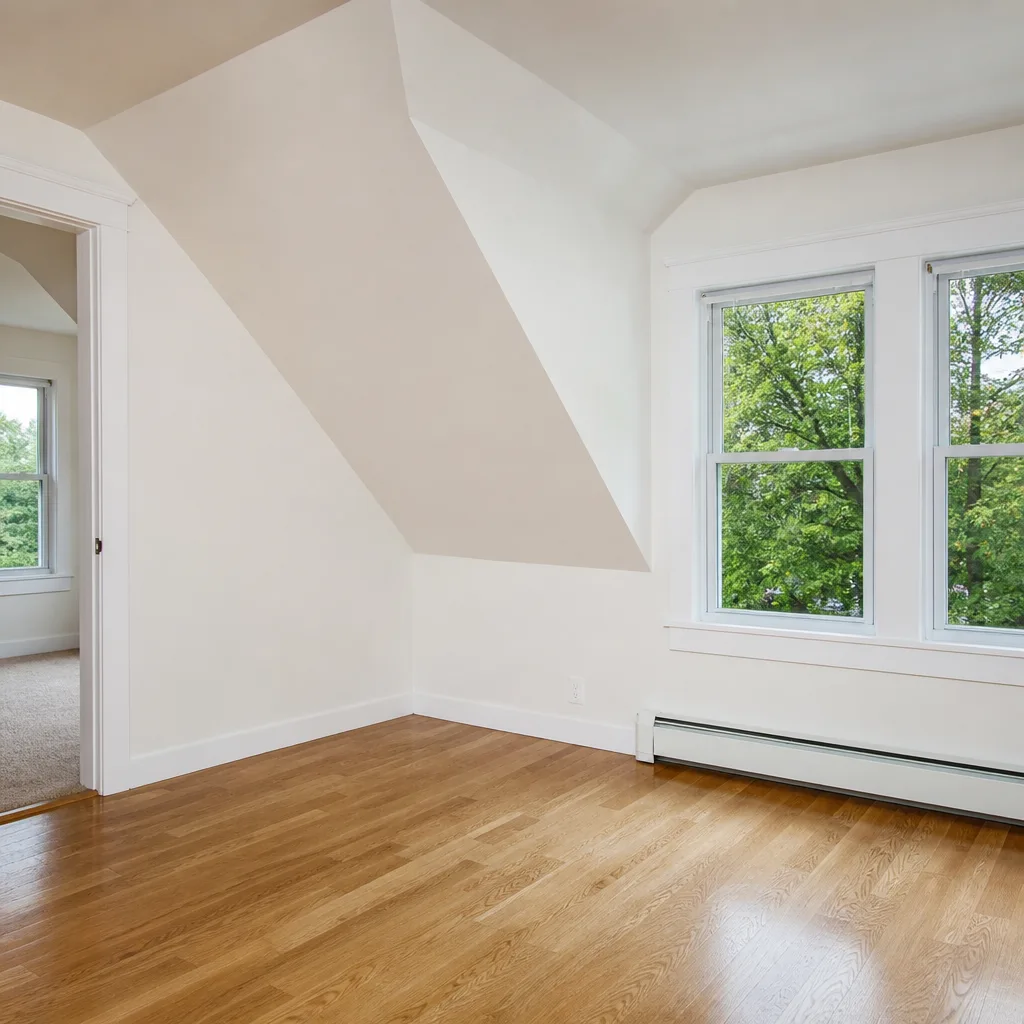

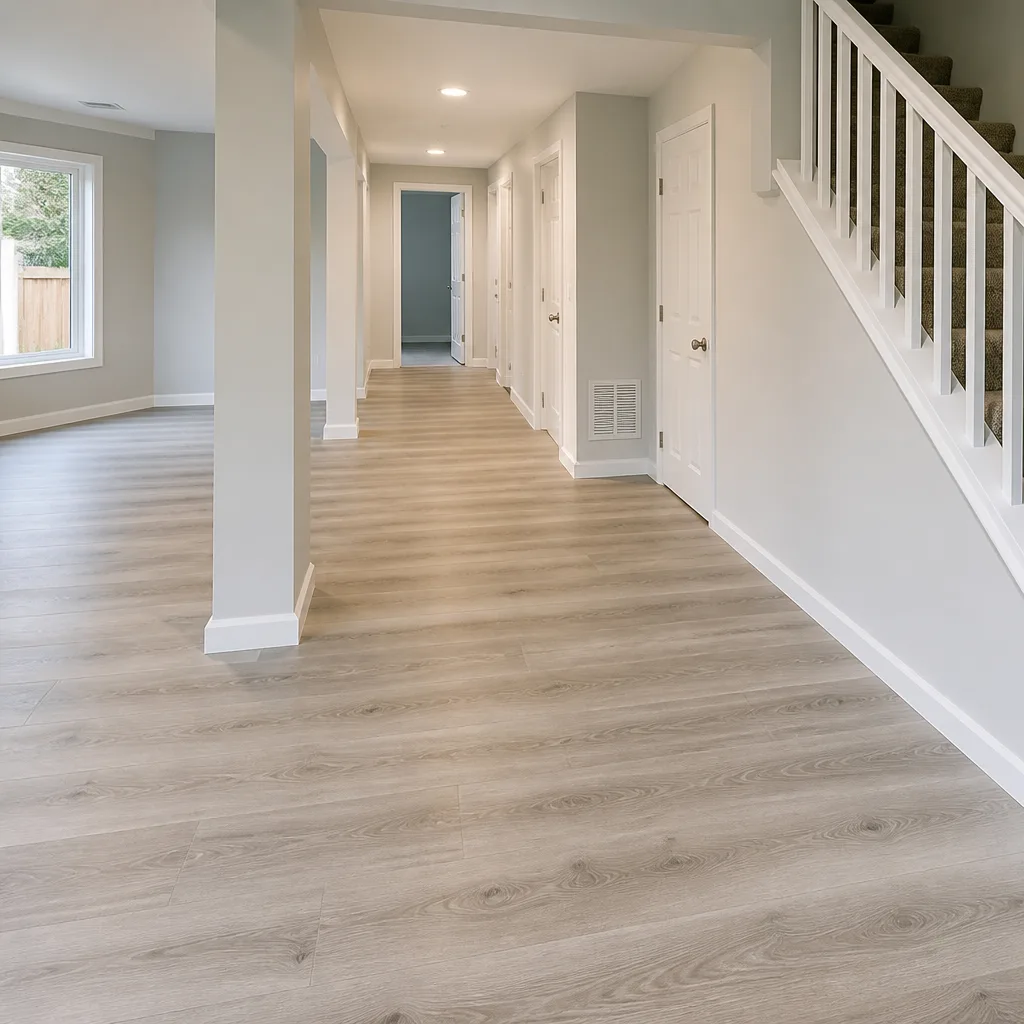
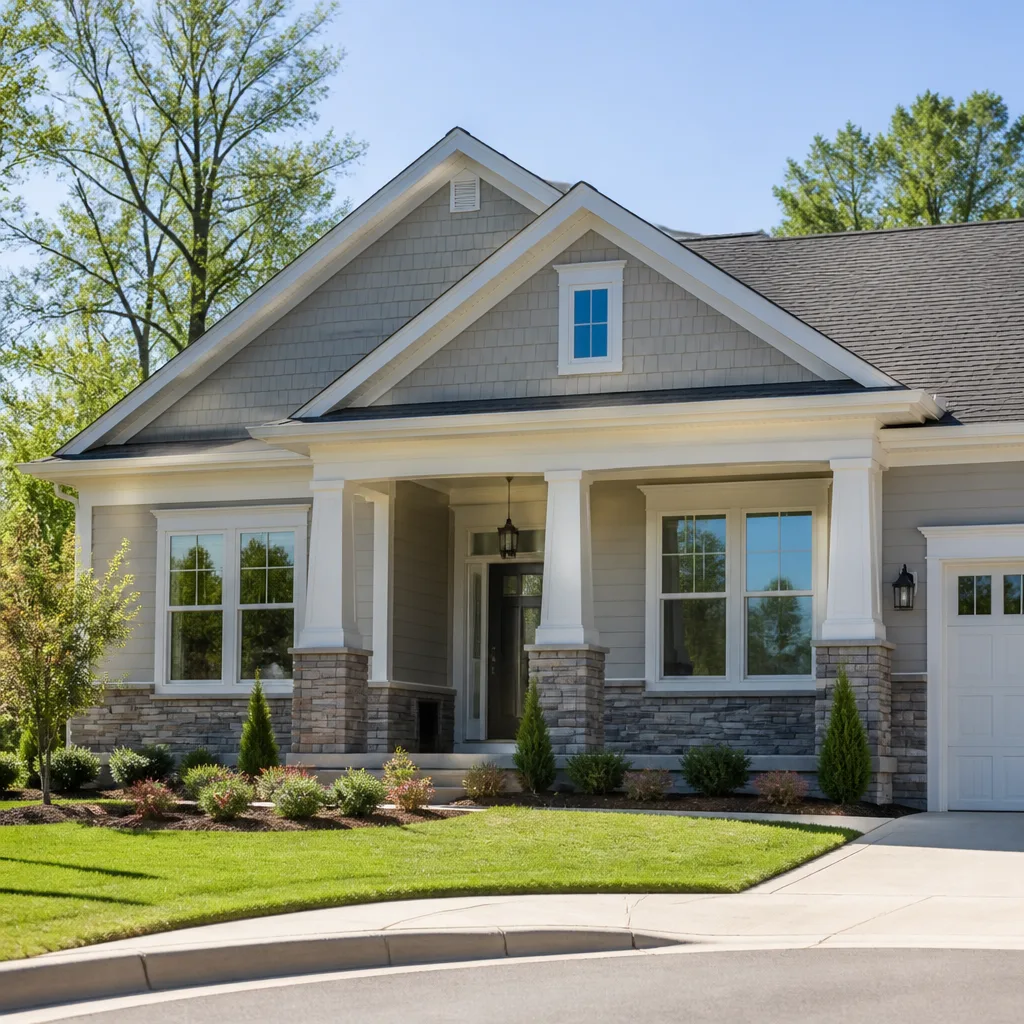
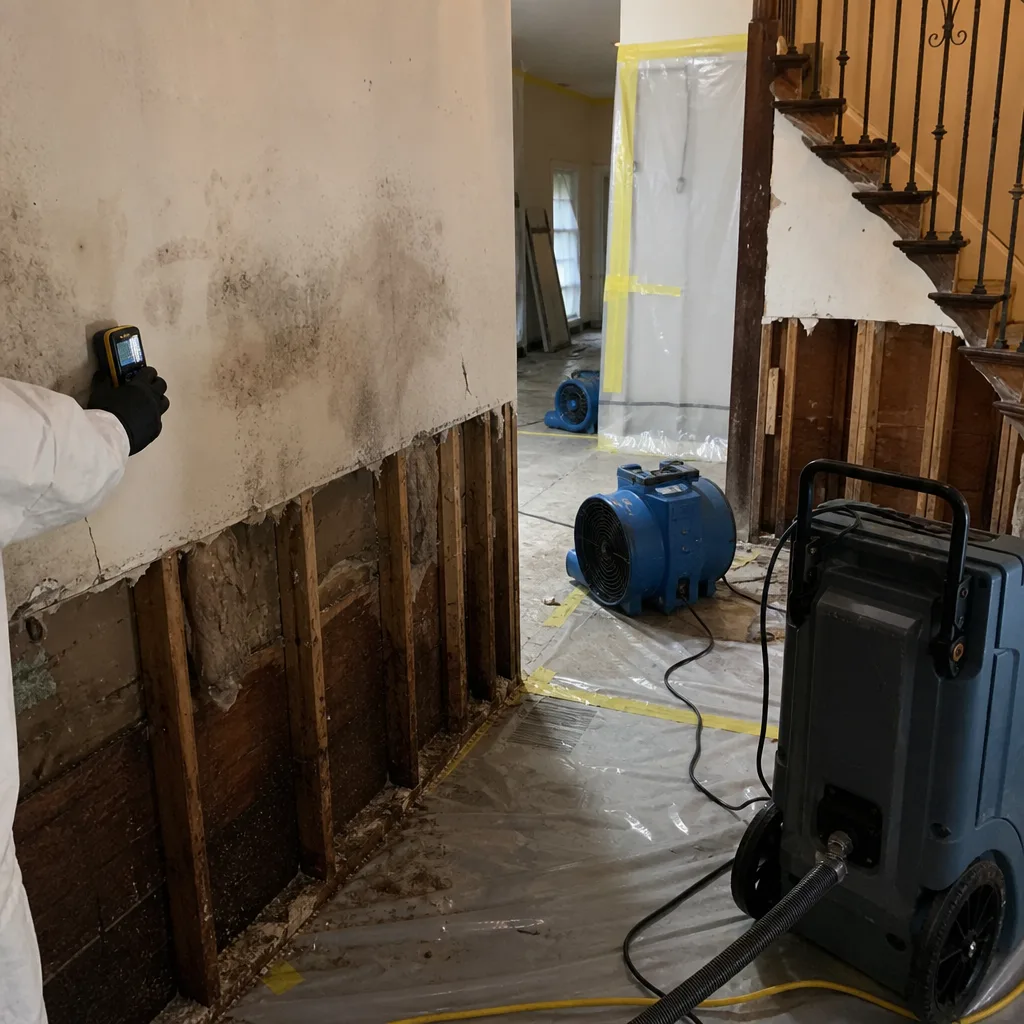 Before
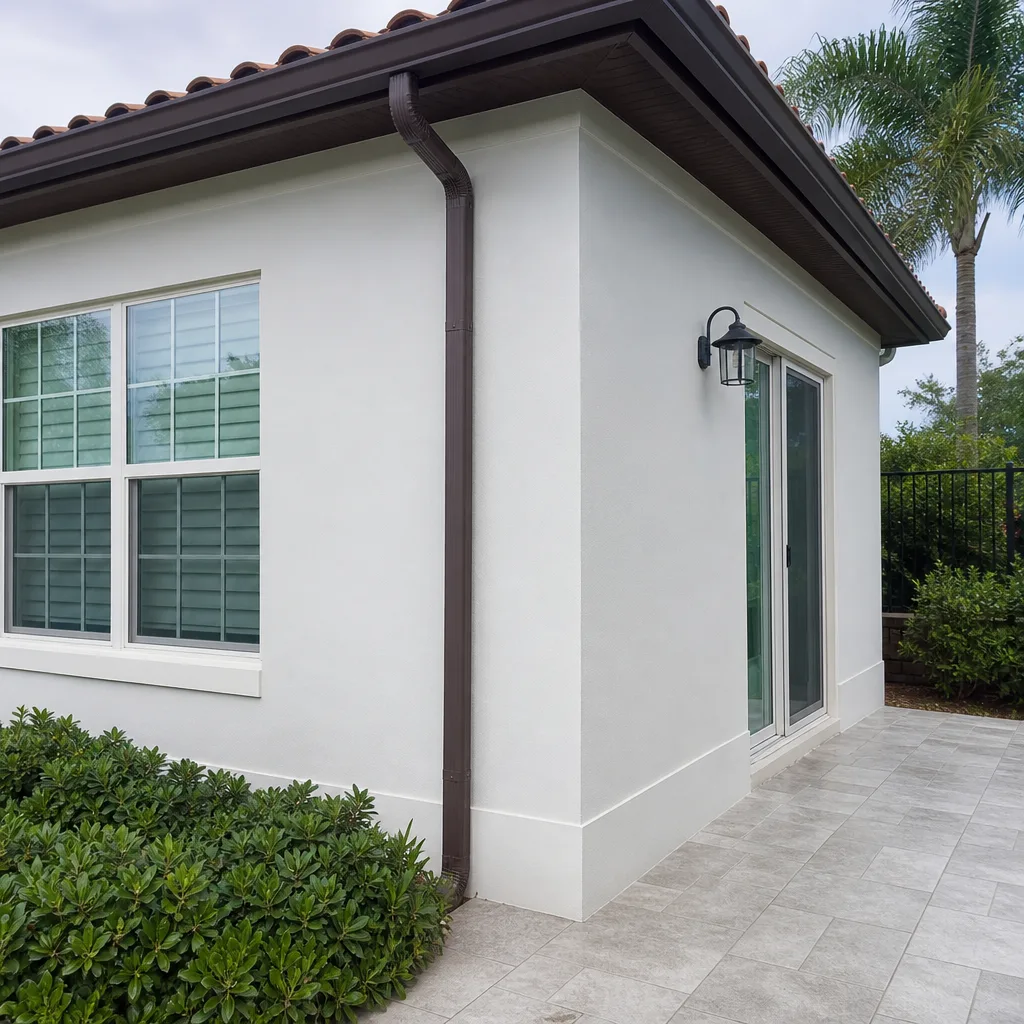 After
After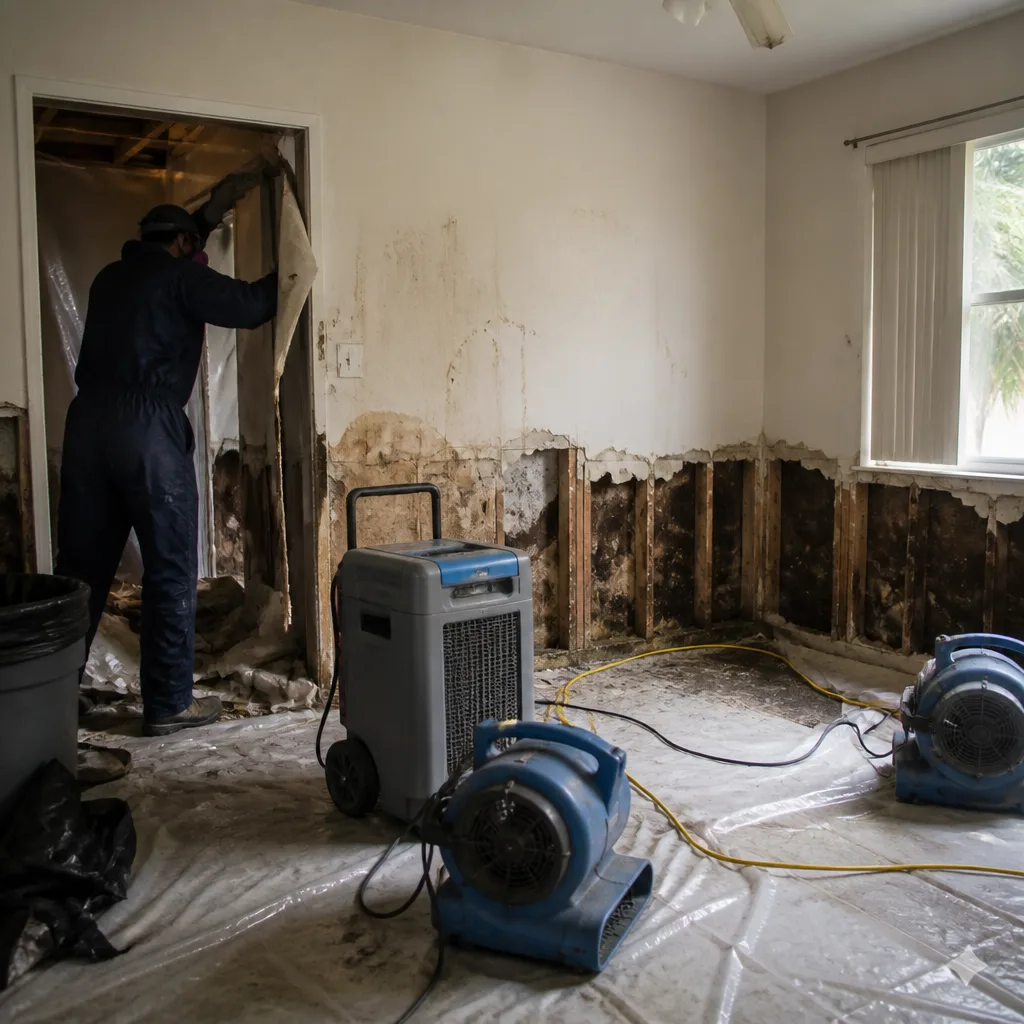 Before
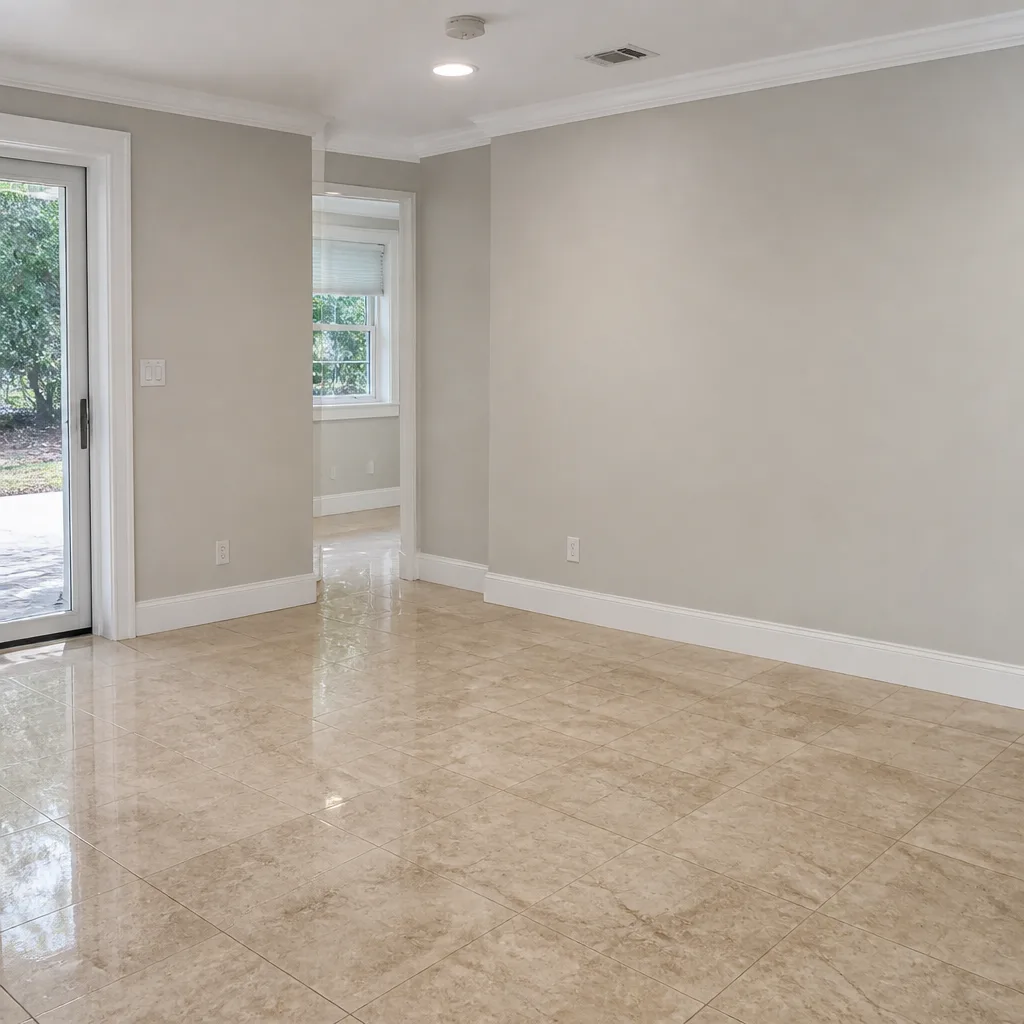 After
After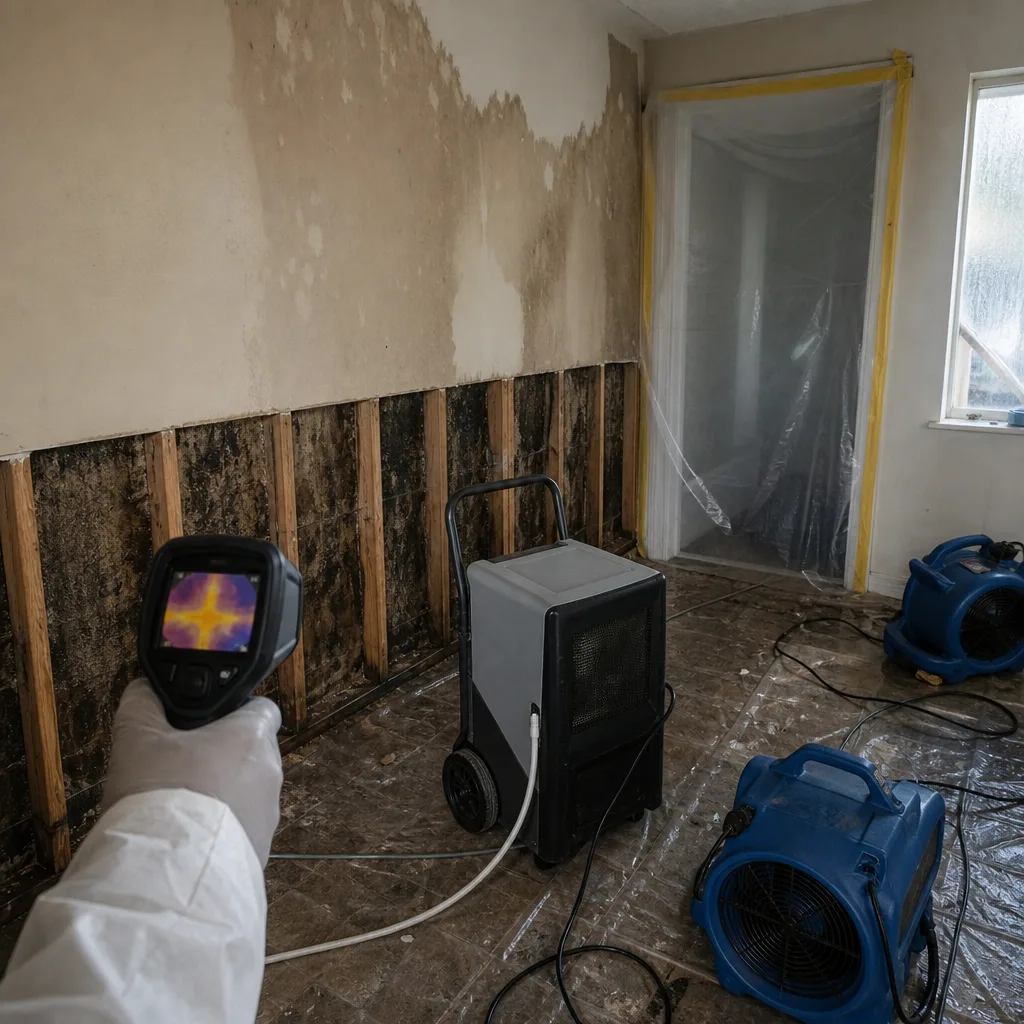 Before
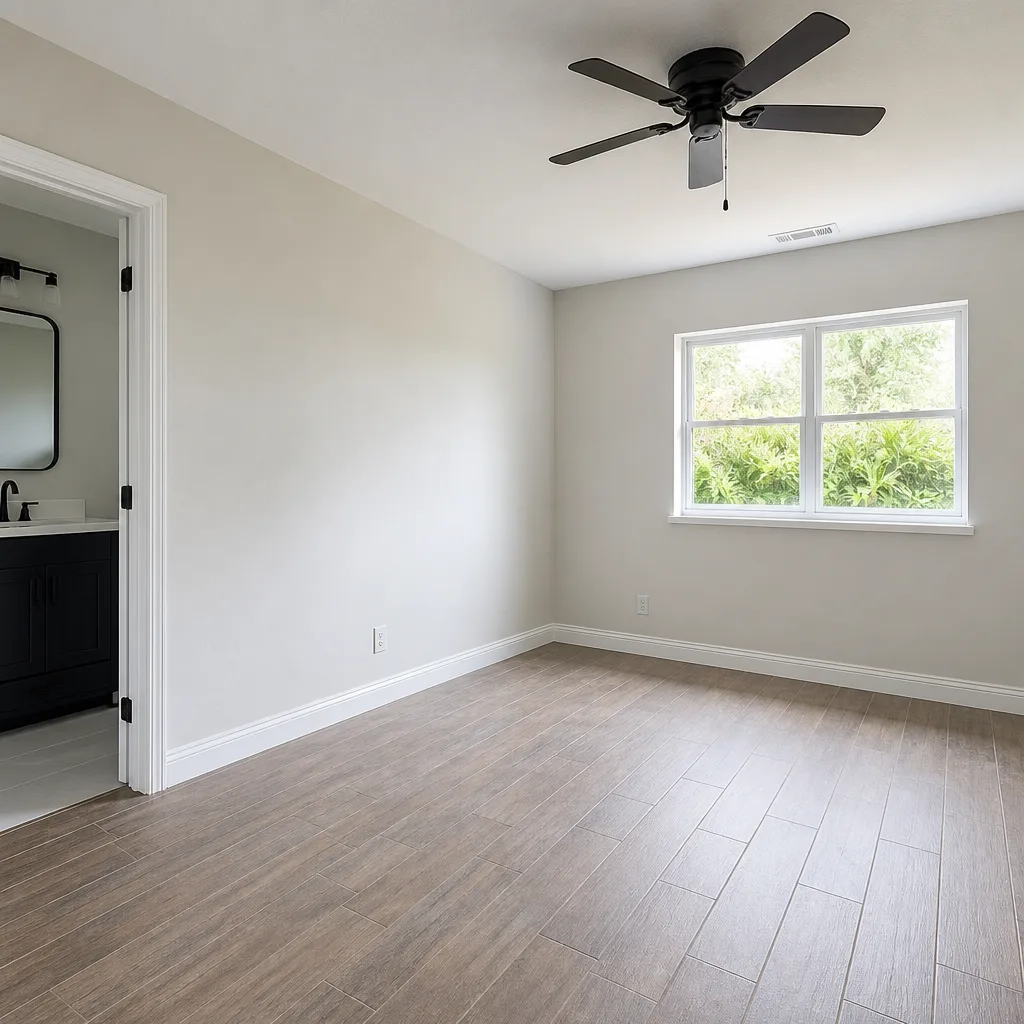 After
AfterDamage Restoration Permits, Codes & Inspections in FL: What You Need to Know
A Boca Raton homeowner who accepts a “no-permit” restoration to avoid delays can face a mandatory tear-out and re-inspection when they sell - a cost that dwarfs the original repair. In our experience since 2011, we’ve seen sellers in neighborhoods like Old Floresta and Boca Square discover that unpermitted water damage repairs from five years prior now trigger a full code-upgrade requirement under Florida’s 50% rule, turning a $12,000 restoration into a $40,000 reconstruction. This guide explains which restoration work triggers a permit requirement in Florida, what Palm Beach County inspectors actually look for at final sign-off, and how to protect your property value and insurance claim by verifying permit status yourself. For Damage Restoration Warning Signs: A Boca Raton Homeowner’s Reference Guide, see our companion post.
Quick Answer
Most structural drying, electrical replacement, HVAC remediation, and reconstruction work in Florida requires a permit under the Florida Building Code. In Palm Beach County, emergency permits for active water intrusion can be issued within 24 hours, but the work must still pass inspection. Unpermitted restoration leaves homeowners exposed to stop-work orders, voided insurance coverage, and mandatory tear-outs at resale.
Table of Contents
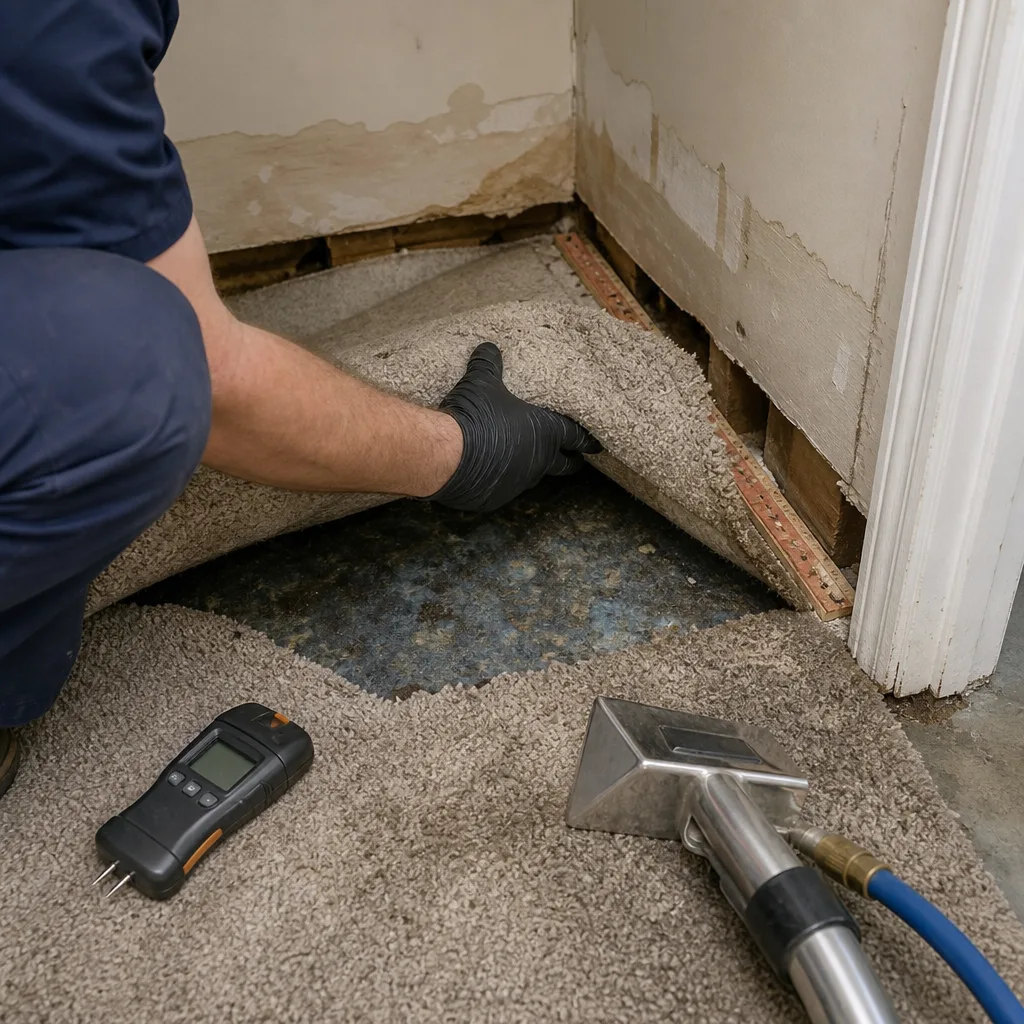
- When Florida Restoration Work Requires a Permit
- How Palm Beach County Processes Emergency Permits
- The 50% Rule: How “Substantial Improvement” Changes Everything
- Certificate of Completion vs. Certificate of Occupancy
- How to Verify a Pulled Permit Online
- Permits, Inspections, and Your Insurance Claim File
- Common Mistakes to Avoid
- When to Call a Professional
 Before
 After
AfterWhen Florida Restoration Work Requires a Permit
The Florida Building Code (FBC) draws a bright line that many restoration contractors in Boca Raton prefer to blur: if you’re cutting into a structural member, replacing electrical components, modifying HVAC systems, or reconstructing any portion of the building envelope, you need a permit. The question isn’t whether the work is “just drying” or “just cleanup.” The question is whether the work affects the building’s structural integrity, life safety systems, or weather protection.
Here are the specific restoration scenarios that trigger permit requirements under the current FBC:
- Structural member replacement: Any removal and replacement of load-bearing studs, joists, rafters, subflooring, or sheathing. This includes the common practice of cutting out “just the wet section” of a bottom plate after slab leak damage - if you’re sistering or replacing, it’s a permit.
- Electrical work following water exposure: Outlets, switches, panels, or wiring that has been submerged or subject to high humidity must be evaluated by a licensed electrician. Replacement of any electrical component requires an electrical permit. We’ve documented cases in Boca Raton where insurers denied claims because unlicensed technicians replaced outlets without permits, creating a liability gap.
- HVAC duct remediation: Ductwork replacement or modification, including the flexible ducts commonly affected by attic water intrusion in Boca Raton’s flat-roof ranch homes. Cleaning alone does not require a permit; replacement does.
- Re-roofing after storm damage: Any roof covering replacement exceeding 25% of the total roof area in a 12-month period triggers a full roof permit and inspection. This is particularly relevant in Boca Raton’s coastal wind zones, where hurricane damage often exceeds this threshold.
- Plumbing repair beyond fixture replacement: Repiping, valve replacement behind walls, or any work that requires opening the wall cavity.
- Drywall replacement exceeding one sheet in the same room: Palm Beach County interprets this as reconstruction, not repair, when structural or moisture-barrier function is involved.
The code does not require permits for emergency mitigation: water extraction, dehumidification, content manipulation, and the application of antimicrobial agents to salvageable surfaces. This is where documentation discipline matters. At DryMark Restoration Boca Raton home, our crews photograph every square foot before any cut is made, creating a clear record of what was mitigation versus what was reconstruction. That photo record, delivered to the homeowner and the adjuster, prevents the “scope creep” disputes that arise when a contractor begins demolition without defining where mitigation ends and reconstruction begins.
One detail competitors rarely address: Florida’s humid subtropical climate means materials that would air-dry in Arizona or Colorado often cannot be salvaged here. The FBC’s reference standards for water damage restoration, IICRC S500, account for this - but only if the drying process is documented with daily psychrometric readings. Vapor pressure differential, the measurable force that drives moisture from wet materials into the air, must be maintained and logged. Without that log, an inspector has no evidence that “drying only” was sufficient, and the default assumption becomes that replacement was necessary. Our Phoenix and Dri-Eaz dehumidification systems generate that data automatically, and we include it in every job file.
How Palm Beach County Processes Emergency Permits
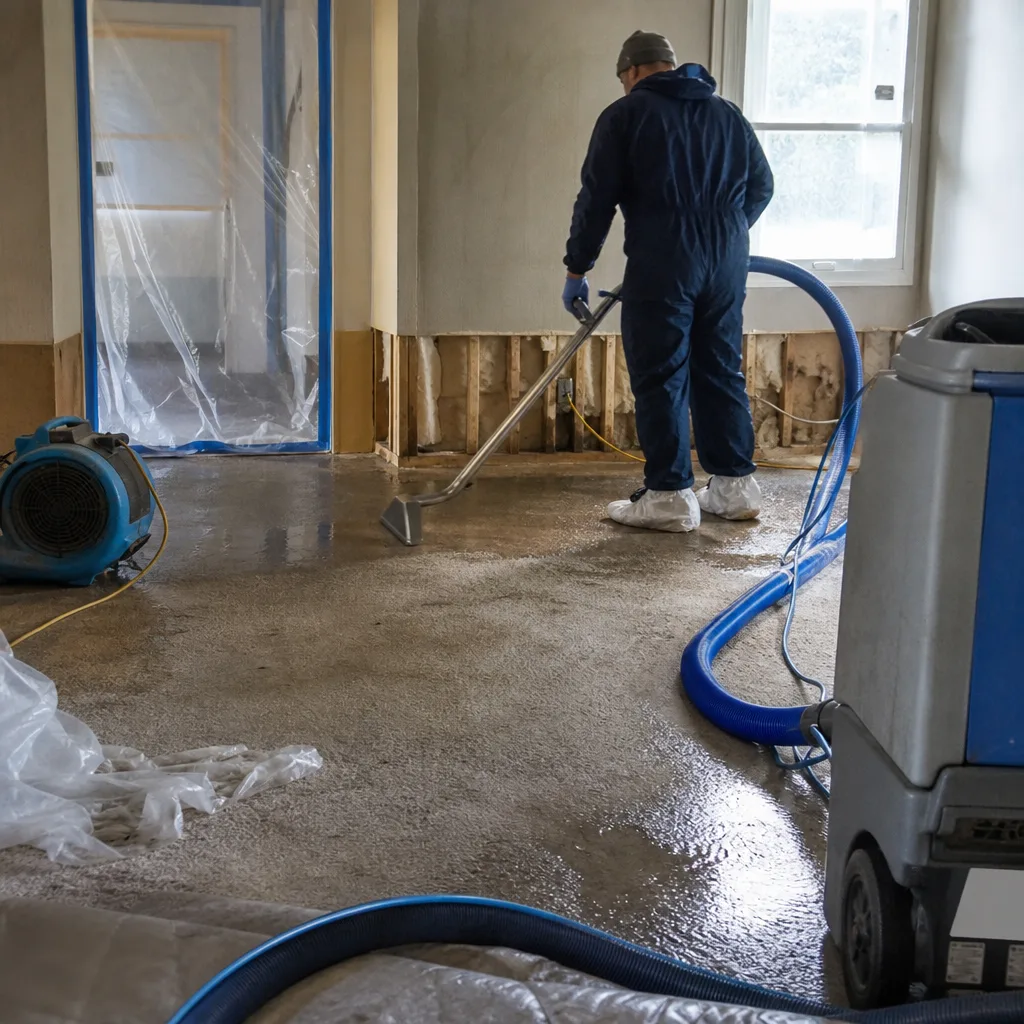
Active water intrusion is a genuine emergency, and Palm Beach County’s Building Division has a specific pathway for it. Understanding that pathway prevents the two most common errors we see: contractors who skip permits entirely, and contractors who wait for standard permitting while water continues to damage the structure.
The Emergency Permit Process
- Initial call to the Building Division: The property owner or contractor contacts Palm Beach County at (754) 247-1426 and requests an emergency permit for active water damage. This line is staffed during business hours; after hours, the fire department or police department can issue a temporary emergency authorization for life safety measures only.
- Same-day or next-day inspection: For verified active leaks, flooding, or storm damage, an inspector will visit the property to assess the scope and issue a limited emergency permit. This permit authorizes demolition of damaged materials, drying operations, and temporary weatherproofing.
- Formal permit application within 72 hours: The contractor must submit complete plans and specifications within three business days. Failure to do so voids the emergency authorization and exposes the property to a stop-work order.
- Progress inspections: For work involving structural, electrical, or plumbing components, rough inspections occur before walls are closed. This is where many restoration projects fail: a contractor closes drywall over uninspected electrical work, and the inspector requires it to be opened.
- Final inspection and Certificate of Completion: All work must match the approved scope. The inspector verifies code compliance, signs off, and the permit is closed.
What documentation does the inspector require at final sign-off? This is where Water Damage Restoration in Boca Raton projects often stall:
- Manufacturer specifications for all replacement materials, including moisture-resistant drywall (green board or purple board, not standard white) in wet zones
- Licensed subcontractor documentation for electrical, plumbing, or HVAC work
- Photo record of the damage before repair, during repair, and after repair - the same documentation we provide as standard on every DryMark job
- Moisture readings demonstrating that substrate materials were dried to within 4% of dry standard before enclosure, per IICRC S500
- Wind mitigation documentation for roof repairs in coastal zones, including Boca Raton’s HVHZ (High Velocity Hurricane Zone) requirements
The inspector is not your adversary, but they are not your advocate either. Their job is to verify that the work meets code. A contractor who treats inspection as an afterthought - who shows up with incomplete paperwork or argues that “everyone does it this way” - wastes your time and extends your displacement. We’ve learned to front-load documentation: our project managers prepare permit packages before the first dehumidifier is plugged in, and we coordinate inspection scheduling as part of the project timeline, not as a reactive scramble.
The 50% Rule: How “Substantial Improvement” Changes Everything
This is the provision that transforms a routine restoration into a full code-upgrade nightmare, and it’s the single most underexplained risk in Boca Raton’s older neighborhoods.
Florida’s “substantial improvement” rule, found in FBC Section 1612 and the National Flood Insurance Program regulations, states that if the cost of repairs or improvements to a structure exceeds 50% of its market value (excluding land), the entire structure must be brought into full compliance with current code. Not just the repaired portion. The entire structure.
In Boca Raton, this matters intensely for homes built before the mid-1980s in neighborhoods like Old Floresta, Boca Square, Camino Gardens, and parts of Pearl City. These homes were constructed under earlier, less stringent codes. Their electrical systems may not meet current AFCI/GFCI requirements. Their windows may not meet impact standards. Their floor elevations may be below current floodplain requirements. A water damage restoration that replaces flooring, drywall, electrical, and HVAC in a 1970s ranch can easily cross the 50% threshold - especially when mold remediation is required and the full scope is aggregated over a 12-month period.
Here’s how the math works against homeowners:
- Market value of structure: $280,000 (land excluded)
- 50% threshold: $140,000
- Water damage restoration: $45,000
- Mold remediation discovered mid-project: $38,000
- HVAC duct replacement: $22,000
- Electrical upgrade triggered by water exposure: $19,000
- Roof repair from associated storm damage: $28,000
- Total: $152,000 - exceeding the threshold by $12,000
Once that threshold is crossed, the permit becomes a “substantial improvement” permit. The home must be elevated if it’s in a flood zone. All electrical must be brought to current code. Windows must be replaced with impact-rated units. The cost escalation is not incremental; it’s structural, in every sense.
The critical protection for homeowners: accurate scope segregation and documentation. If mold remediation is documented as a separate, prior loss with its own claim file and permit history, it may not aggregate. If electrical work is performed under a separate permit pulled by a licensed electrician, it may be treated independently. But this requires deliberate documentation strategy from day one - not the “we’ll figure it out later” approach that characterizes too many restoration projects.
At DryMark Restoration Boca Raton, our project managers calculate the 50% threshold before work begins on any pre-1990 structure. If we’re approaching the limit, we flag it in writing and consult with the homeowner’s insurance adjuster before proceeding. Haven Standard, Clause 1 applies: the written price includes this analysis, not just the visible damage. A homeowner who receives a quote that doesn’t address substantial improvement risk is receiving an incomplete scope.
Certificate of Completion vs. Certificate of Occupancy
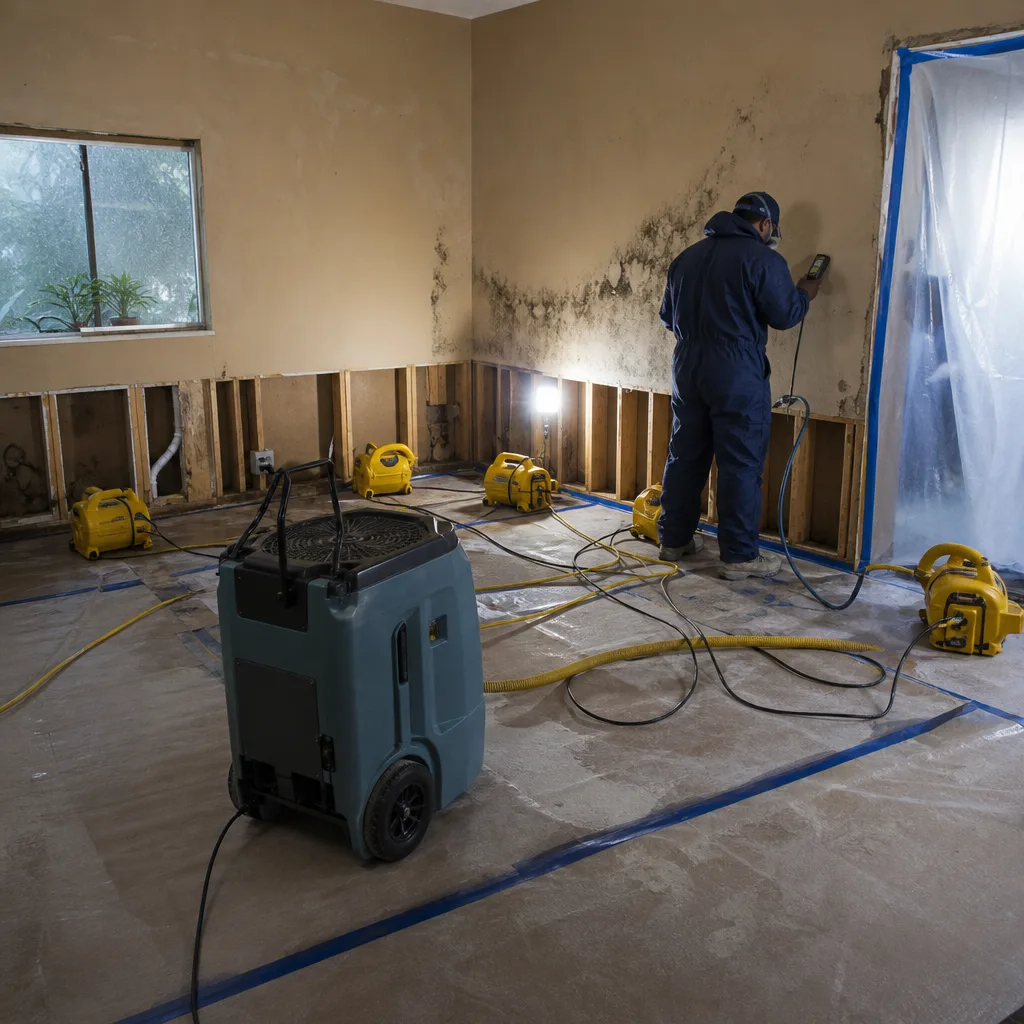
This distinction costs homeowners at settlement, and it’s entirely preventable with basic documentation literacy.
A Certificate of Completion (CC) is issued when permitted restoration work is finished and has passed final inspection. It confirms that the specific work authorized by the permit - structural repair, electrical replacement, roof repair - meets code. It does not certify that the entire building is habitable or that all systems function. It is a permit-closure document.
A Certificate of Occupancy (CO) certifies that an entire building, or a distinct occupancy portion, is safe for human habitation under all applicable codes. New construction requires a CO. Change of occupancy - converting a garage to living space, for example - requires a CO. Most restoration work does not require a new CO, unless the damage was so extensive that the building was officially deemed uninhabitable and the CO was revoked.
Where homeowners get hurt: they accept a CC from their restoration contractor, assume it means “everything is fine,” and discover at resale that the CC doesn’t address unpermitted work performed by the same contractor under a separate “mitigation” invoice. Or they learn that their insurance claim was closed based on a CC, but the mortgage lender requires a CO for escrow release because the damage triggered a habitability clause.
Here’s what to demand in your documentation:
- One CC for each permit pulled, with the permit number referenced
- Written confirmation from the contractor that all work requiring permits was included in the permit application - not performed “off permit” as a separate line item
- Verification that the CC was recorded with Palm Beach County and appears in the public permit history (see next section)
- For severe damage: explicit written statement from the building official whether a new CO was required, obtained, or waived
Our standard deliverable at Fire & Smoke Damage Restoration in Boca Raton and all other services includes the CC, the permit record printout, and a cover letter explaining what each document means for the homeowner’s claim file and future sale. We do this because Alicia Brennan founded this company after watching homeowners lose claims to documentation gaps - and a CC without context is a gap.
How to Verify a Pulled Permit Online
You do not need to trust your contractor’s word. Palm Beach County maintains a public permit records portal that any homeowner can access. Here’s the exact process:
- Navigate to the Palm Beach County ePZB portal at epzb.co.palm-beach.fl.us (or search “Palm Beach County permit search”)
- Select “Search by Address” and enter your property address exactly as it appears on your tax record - including unit number if applicable
- Review the permit history. Active permits show in blue; closed permits in green; expired or voided permits in red
- Click any permit number to view the scope of work, contractor name, issue date, and inspection history
- For each inspection listed, verify that “Final” status shows “Approved” or “Passed” - not “Pending,” “Re-inspection Required,” or blank
Red flags that demand immediate follow-up:
- The contractor claims a permit is “pending” but no record appears after 48 hours - permits are entered into the system at application, not at approval
- The permit scope is narrower than the work described in your contract - “replace drywall in bedroom” when your contract includes electrical and HVAC
- The contractor name on the permit differs from the company you’re paying - common with unlicensed operators using another company’s license
- Inspections show multiple “Re-inspection Required” entries without resolution - indicating code deficiencies that may affect your warranty
- The permit expired before final inspection - work performed under an expired permit is unpermitted work
If you find a discrepancy, contact the Palm Beach County Building Division directly at (754) 247-1426. Do not confront the contractor first; you want the official record before any conversation. If work is ongoing and no permit exists, you have the right to demand a halt until permitting is complete. A contractor who resists this is a contractor to replace.
We provide every DryMark customer with their permit numbers and direct portal links before work begins. Transparency is cheaper than litigation.
Permits, Inspections, and Your Insurance Claim File
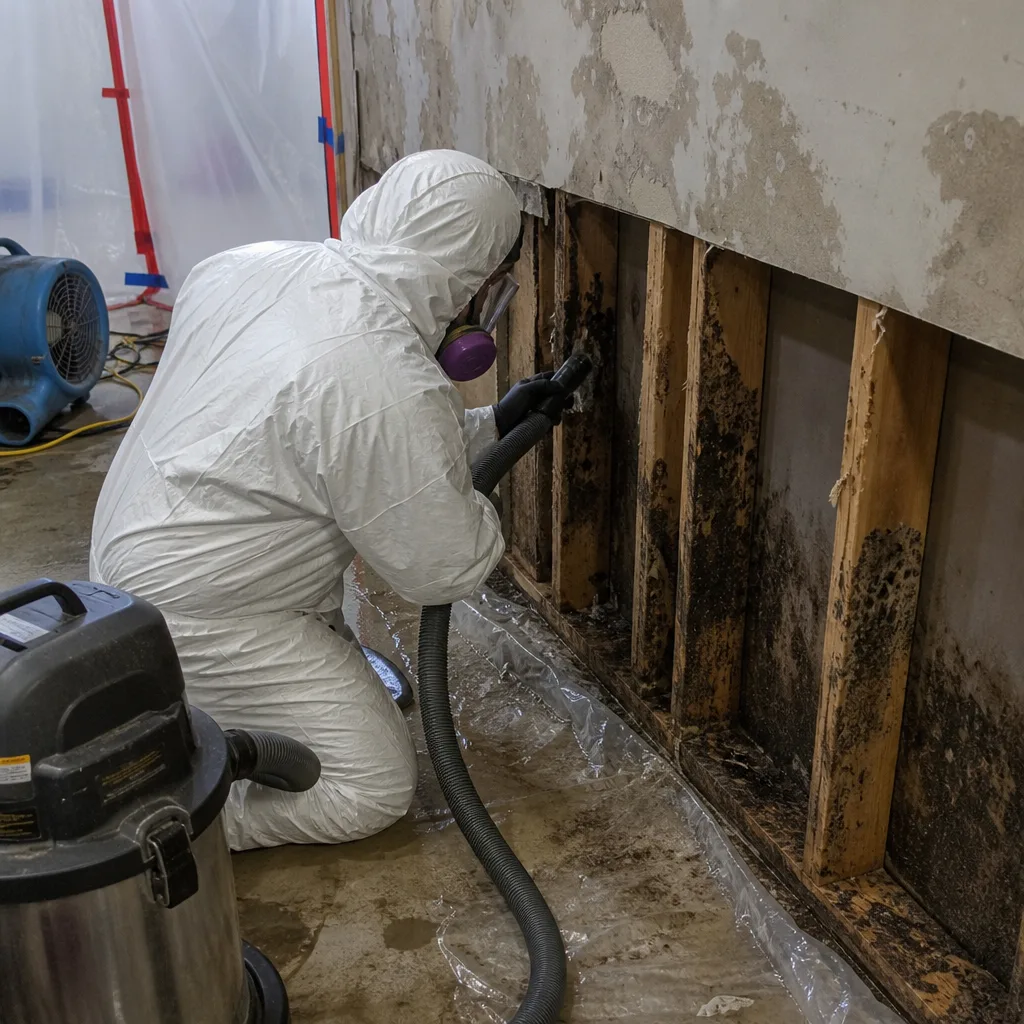
Insurance adjusters and underwriters have become increasingly sophisticated about permit verification. What was once a checkbox exercise - “was the work performed?” - now includes automated pulls of municipal permit data at claim review and at policy renewal. Unpermitted work is increasingly treated as uninsured work, because the insurer’s risk assumption was based on code-compliant repair.
Here’s how permits integrate with claim documentation at each stage:
Initial claim documentation: The adjuster’s scope of work should reference permit requirements for any reconstruction component. If it doesn’t, that’s a gap to flag. Our project managers review adjuster scopes against permit requirements and document discrepancies in writing - part of our Free Second Opinion on any competitor’s written estimate.
Work-in-progress documentation: Daily drying logs, photo records, and moisture readings serve dual purposes. They prove the necessity of the work to the insurer, and they prove code compliance to the inspector. Our Injectidry and XPOWER drying systems generate timestamped data that satisfies both audiences. Without this documentation, an insurer may question whether replacement was necessary, and an inspector may require destructive testing to verify drying completeness.
Final claim submission: The permit closure documentation - CC, inspection records, and contractor affidavits - should be submitted with the final invoice. This creates a complete file that resists post-payment audit recovery. We’ve seen insurers attempt to “claw back” payments years later when permit gaps are discovered; a complete file prevents this.
Policy renewal and future claims: Unpermitted work in your property history can trigger premium increases, coverage exclusions, or declination of renewal. Florida’s insurance market is already stressed; any additional risk factor matters. Documented, permitted work is a neutral or positive factor. Unpermitted work is a negative factor with no upside.
For Mold Remediation in Boca Raton, the documentation requirements are even more stringent. Florida’s mold licensing law requires that all mold assessment and remediation be performed by licensed professionals, with documentation maintained for three years. The permit and inspection record is part of that mandatory documentation. A homeowner who cannot produce it may face liability if mold recurs and affects subsequent occupants.
Common Mistakes to Avoid
- Accepting “permit included later” as a payment term. In Boca Raton, we’ve seen contractors collect full payment while promising to “pull the permit next week” - then disappear. Payment should be tied to permit closure, not just completion of visible work.
- Confusing mitigation with reconstruction on the invoice. A single invoice line item for “water damage restoration” that includes both extraction and drywall replacement obscures the permit trigger. Demand itemization that separates non-permitted mitigation from permitted reconstruction.
- Failing to verify the contractor’s license against the permit. Palm Beach County requires the licensed contractor to be the permit holder. If your contract is with “ABC Restoration” but the permit is held by “XYZ Contractors,” you have no direct contractual recourse against the permit holder.
- Ignoring the 12-month aggregation rule for substantial improvement. Two separate losses six months apart - a pipe burst in January, a roof leak in June - can combine to trigger the 50% rule. Maintain a running total of all restoration costs, not just the current project.
- Assuming a “final walkthrough” equals inspection approval. The contractor’s internal quality check is not the building official’s code verification. Demand the CC before final payment, and verify it on the portal.
- Neglecting to request permit documentation for “minor” electrical or plumbing work. Any electrical component replacement beyond like-for-like in the same location requires a permit. The “it was just one outlet” excuse fails at inspection.
- Accepting verbal assurance that mold remediation “doesn’t need permits.” Mold remediation itself does not always require a building permit, but the reconstruction that follows it almost always does. The permit gap often occurs in the transition between these phases.
When to Call a Professional
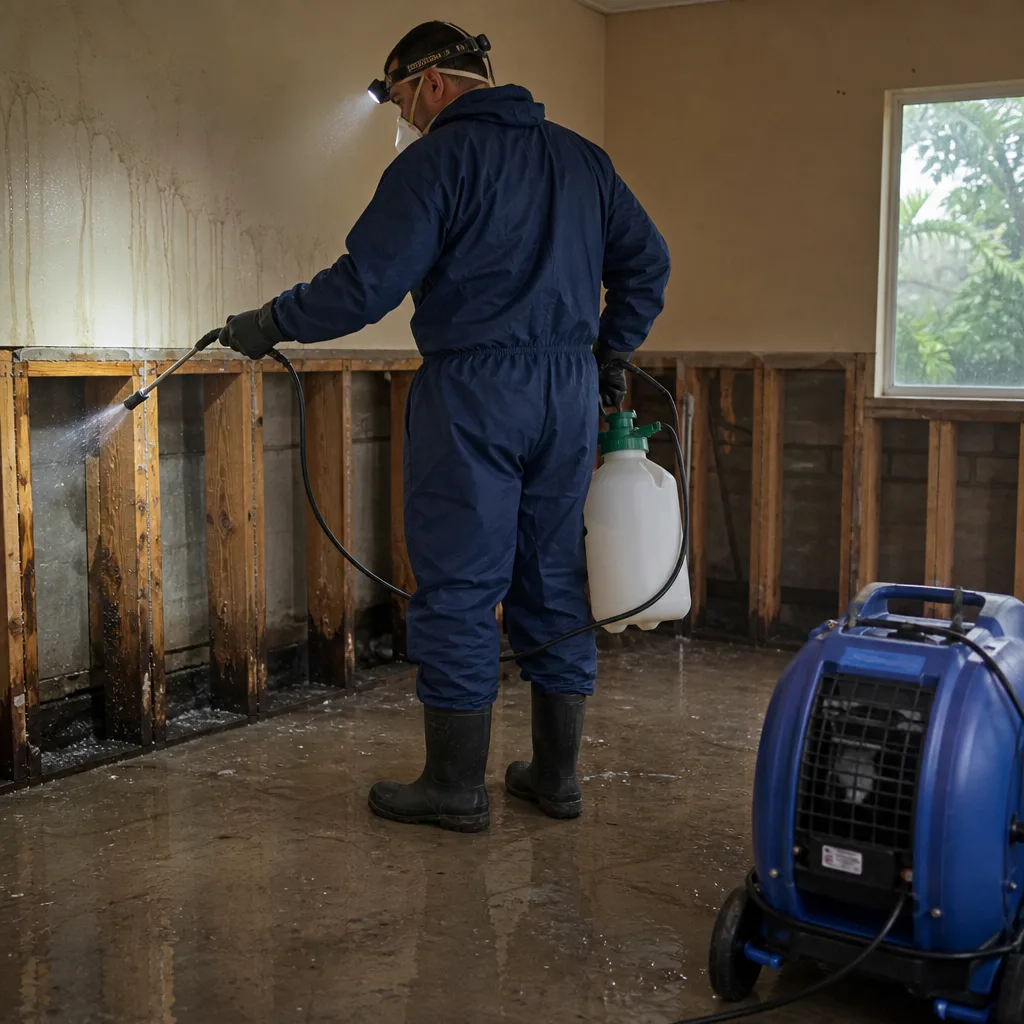
Call a licensed restoration contractor before you sign any insurance settlement or contractor agreement if: your damage involves structural materials, electrical systems, HVAC, or roofing; your home was built before 1990 and the repair estimate exceeds $20,000; you’ve received conflicting opinions about permit requirements from different contractors; or you’re approaching a real estate transaction and need to verify the permit history of prior repairs. See DIY vs Professional Damage Restoration: The Boca Raton Homeowner’s Decision Guide to weigh your options.
DryMark Restoration Boca Raton offers free estimates in Boca Raton - call (754) 247-1426. Every estimate includes a permit requirement analysis, a written price before work begins under Haven Standard, Clause 1, and a documented photo record on every visit. We also provide a Free Second Opinion on any competitor’s written estimate, with specific attention to permit gaps and scope omissions that can cost you at resale. For guidance on vetting contractors, read How to Hire a Damage Restoration Contractor in Boca Raton: A Step-by-Step Guide.
Frequently Asked Questions
No. Emergency water extraction, dehumidification, and antimicrobial application do not require permits. However, any structural repair, electrical replacement, HVAC modification, or reconstruction of building envelope components does require permitting under the Florida Building Code. The dividing line is whether the work affects structural integrity, life safety, or weather protection. Call (754) 247-1426 for a free estimate that specifies which portions of your project require permits.
For verified active water intrusion, Palm Beach County Building Division typically issues an emergency permit within 24 hours of application, often same-day if the damage is documented with photos and the contractor is pre-registered. The formal permit application must follow within 72 hours. Delays usually occur when contractors are not pre-qualified with the county or when the scope is unclear. At DryMark Restoration Boca Raton, we maintain pre-registration and prepare permit packages before arrival.
Generally no, and increasingly never. Most homeowner policies contain exclusions for work that violates applicable building codes, and unpermitted work is presumptively non-compliant. Even if the insurer initially pays, post-payment audits and permit record cross-checks can trigger clawback demands. The safer path: permit all required work, document the permit in the claim file, and close the loop with a Certificate of Completion. We coordinate directly with adjusters to ensure permit documentation is included in every claim submission.
Buyers’ inspectors routinely check Palm Beach County permit records. Unpermitted work typically triggers a demand for retroactive permitting, which requires opening walls and floors for visual inspection by a building official. If the work doesn’t meet current code - common with pre-1990 homes - the correction costs often exceed the original repair. In Boca Raton’s competitive market, this discovery can derail a sale or force a significant price reduction. The 50% substantial improvement rule adds particular risk for older homes.
Florida law permits property owners to act as their own contractor on their primary residence, but this carries significant liability. You become responsible for code compliance, worker injury claims, and subcontractor licensing. For restoration work involving multiple trades - common in water and fire damage - the practical and legal risks of owner-permitting usually outweigh any cost savings. A licensed restoration contractor carries the insurance, bonding, and trade licenses that protect you. DryMark Restoration Boca Raton pulls all required permits as standard practice, with no markup on permit fees.
Verify directly through Palm Beach County’s ePZB portal using your property address. Active and closed permits appear within 24 hours of application. If no record exists after 48 hours, the permit was not applied for. Demand the permit number in writing before work begins, and withhold final payment until you can verify permit closure online. This is standard due diligence, not distrust - any legitimate contractor will welcome it. Call (754) 247-1426 if you need assistance interpreting permit records.
The Bottom Line
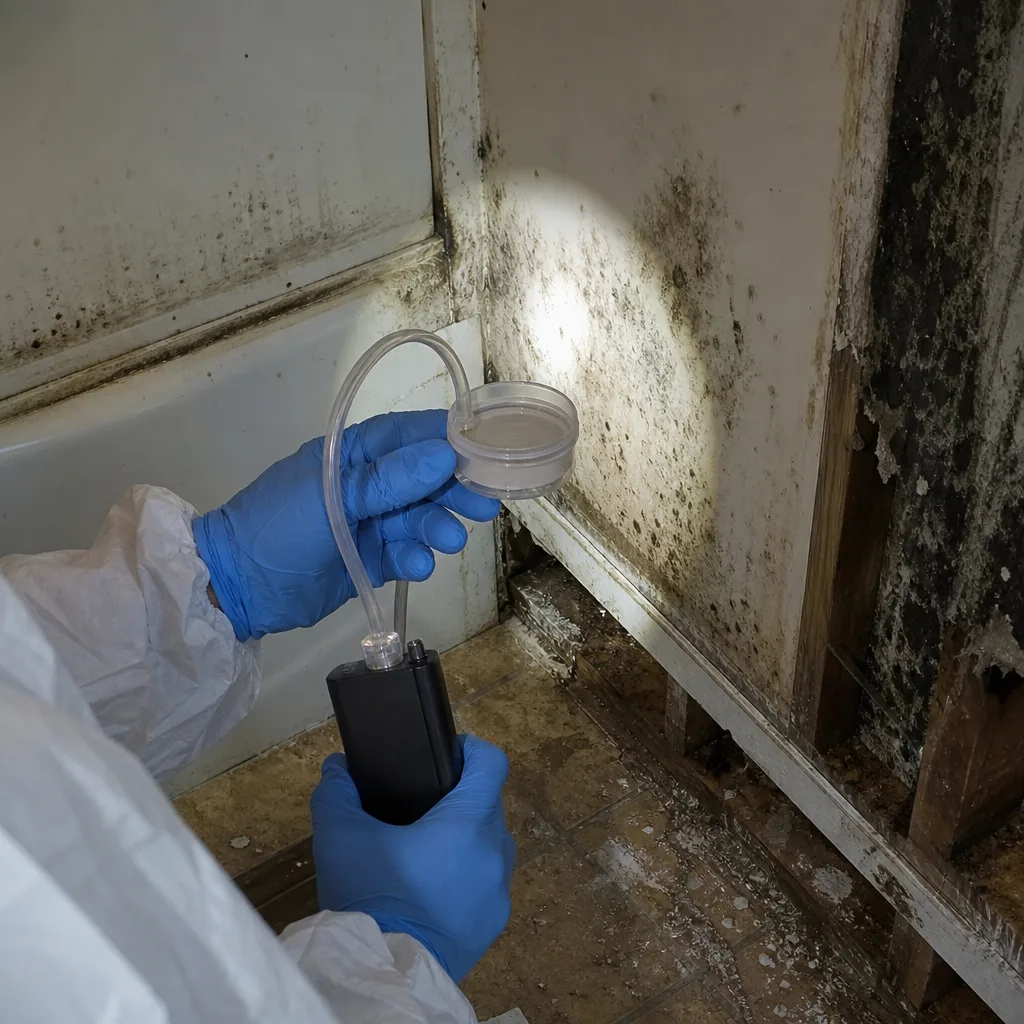
Florida’s permit and inspection framework for restoration work is not bureaucratic obstruction - it’s the documentation structure that protects your property value, your insurance coverage, and your legal liability. The Boca Raton homeowners who suffer are not those who waited for permits; they’re those who discovered unpermitted work at the worst possible moment, usually during a sale or a subsequent claim. Demand written scope, verified permits, and documented completion on every restoration project. Browse more guides & resources to protect your home. The cost of compliance is predictable. The cost of non-compliance is not.
Written by Alicia Brennan, Owner at DryMark Restoration Boca Raton, serving Boca Raton since 2011.